Decorative Frame: The Instant Design Asset for Visual Impact
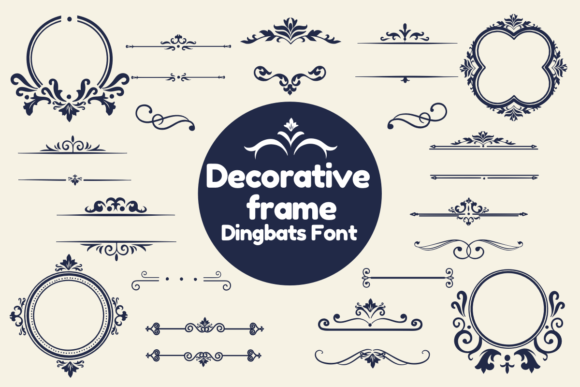
There are moments in design where you need an element that does more than just sit on the page—you need something that actively celebrates the content inside it. A Decorative Frame dingbat font operates on this principle. It’s not your standard serif font or sans serif font; rather, it is a specialized collection of ornamental borders encoded as keyboard characters. When you type a specific letter or number, the output isn't text, but a vector illustration of a frame. This turns the mundane task of border creation into a fluid, creative process, allowing you to wrap your headlines, photos, or quotes in intricate artistry with a single keystroke.
Visual Characteristics and Personality
The defining trait of a high-quality Decorative Frame typeface is its versatility in style. You will typically find a spectrum ranging from Victorian-era filigree and art deco geometry to modern, organic flourishes and rustic woodcut styles. The visual personality is inherently "premium." Because these vectors are hand-drawn or carefully digitized, they carry a weight and texture that automated shape tools in software like Canva or Illustrator often lack. This type of creative font adds a tactile, three-dimensional feel to a flat digital screen, suggesting a sense of heritage, elegance, or playful celebration depending on the specific glyph chosen.
Unlike a standard display font used for headers, the Decorative Frame acts as a container. Its "personality" is supportive but dominant; it draws the eye immediately to the center. The visual appeal lies in the line work—swashes that connect seamlessly, corners that balance perfectly, and negative space that allows the interior content to breathe. It serves as a piece of instant design assets library, solving the common problem of empty space or lack of hierarchy in a layout.
Strategic Applications for Modern Creators
For entrepreneurs and small business owners, the utility of a Decorative Frame extends far beyond simple decoration. It is a strategic tool for brand identity. When used consistently, a specific frame style becomes a recognizable signature. Imagine a bakery using a delicate, flourished frame on every Instagram post or a law firm using a stoic, architectural frame on their digital stationary. This consistency builds recognition faster than changing background colors.
In editorial design and packaging design, these fonts are invaluable. A magazine layout can use a Decorative Frame to isolate a pull quote, instantly elevating it from a block of text to a visual focal point. For product packaging, particularly in the artisanal or gift market, framing the product name or a "Handmade" stamp adds perceived value. It transforms a generic label into a boutique experience. Furthermore, in web design, these frames can be used to highlight "Sale" banners or "New Arrival" tags, breaking the monotony of the grid layout.
Impact on Hierarchy and Audience Engagement
Visual hierarchy is about guiding the viewer's eye, and a Decorative Frame is one of the loudest guides available. By framing a piece of information, you are telling the audience: "Look here first." This is crucial for social media graphics where attention spans are microscopic. A framed "50% Off" message creates an immediate focal point that plain text cannot achieve.
However, this power requires restraint regarding readability. The primary role of the frame is to enhance, not obstruct. If the frame is too ornate or the interior text is too small, the visual noise can overwhelm the message. The best practice is to treat the frame as a background layer. It influences brand perception by adding a layer of professionalism; a well-chosen frame suggests that the creator has paid attention to the details. It bridges the gap between amateur content creation and polished modern typography.
Practical Guidance for Selection and Usage
When integrating a Decorative Frame into your toolkit, consider the following practical steps to ensure it adds value rather than clutter:
- Evaluate Project Fit: Assess the tone of your content. A gritty, hand-drawn frame works for a rock band poster or a craft brewery, but clashes with a corporate tech startup. Ensure the aesthetic of the dingbat matches the emotion of your logo design or campaign.
- Test Font Pairings: The frame is the star, so the interior text should be the supporting actor. Pair ornate frames with clean, legible script fonts or sans serif fonts. Avoid pairing a decorative frame with a highly stylized handwritten font, as this often results in visual chaos where neither element is readable.
- Review Styles and Licensing: Check if the font includes filled versus outline frames. Outline frames are great for a lighter, airier look, while filled frames command more authority. Crucially, verify the commercial font licensing. If you are using these for client work or merchandise, ensure the license covers "print on demand" or extended commercial use.
- Spacing and Kerning: In your design software, you may need to adjust the tracking (spacing) of the frame letters to ensure the corners meet up perfectly or to widen the frame to fit your content block. Treat the typing of the frame less like writing and more like assembling a puzzle.
Ultimately, a Decorative Frame font is a shortcut to elegance. It allows creators to bypass complex vector drawing and instead type their way to a polished, professional aesthetic. Whether you are designing a wedding invitation, a product hang-tag, or a digital banner, mastering this simple asset class can significantly elevate the perceived quality of your work. It proves that sometimes, the best design solutions are already hiding on your keyboard.