Margiona: Weaving Majestic Theater into Modern Design
There’s a particular challenge in modern design: how do you create something that feels both timelessly elegant and utterly contemporary? How do you command attention without shouting, and convey luxury without cliché? The answer often lies in the details, particularly in your choice of typeface. This is where a font like Margiona enters the conversation, offering a unique solution that bridges the grandeur of classical theater with the clean lines of modern aesthetics.
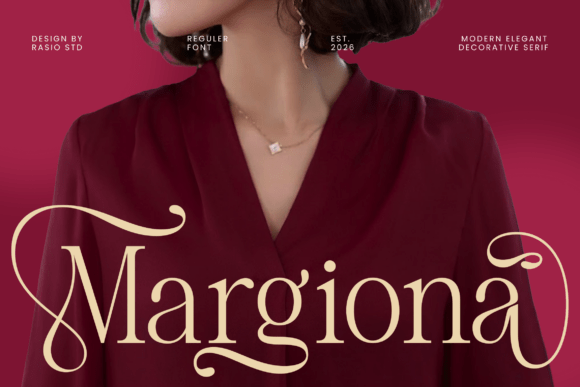
At its heart, Margiona is a display serif font, but that simple classification doesn’t do it justice. Its architecture is rooted in the strong, readable bones of classic Roman serifs, giving it a foundational stability and grace. What sets it apart, however, is the fluid, calligraphic energy woven into its DNA. Imagine the poised posture of a stage actor combined with the sweeping, dramatic gestures of a conductor—this is the visual personality Margiona brings to your projects. Its long, looping swashes and cascading baseline curls aren’t just decorative; they’re performative, transforming standard headings into bespoke layout art.
Where Margiona Truly Shines: Practical Applications
Understanding a font’s character is one thing; knowing where to deploy it is another. Margiona isn’t a workhorse for body text; it’s a specialist, a premium font designed for moments of impact. Its strength lies in creating an immediate atmosphere of upscale sophistication.
Think of projects where first impressions are paramount. In logo design for a boutique brand, Margiona can establish an identity that’s both memorable and refined. It’s exceptionally suited for the packaging design of luxury goods—picture it on a winery label, a fragrance box, or the packaging for high-end jewelry. The font’s elegant curves and interlocking terminals suggest craftsmanship and exclusivity before the product is even touched.
For editorial design, particularly for magazine covers, book titles, or cinematic posters, Margiona provides a built-in sense of drama. It commands the page, drawing the eye and setting a narrative tone. In the realm of web design, use it sparingly for hero section headlines or key call-to-action statements to instantly elevate a landing page’s perceived value. For social media graphics, especially for lifestyle, wedding, or luxury brands, it can make a quote or announcement feel like a curated event.
Maximizing Impact: Pairing and Readability
The power of a display font like Margiona is best realized through thoughtful pairing. Its ornate nature means it requires a complementary partner that provides balance and ensures overall readability. The most common and effective strategy is to pair it with a clean, neutral sans serif font.
Use Margiona for the main headline or a brand name, then set your subheadings or body copy in a sans serif like Montserrat, Lato, or even a simple system font. This contrast creates a clear visual hierarchy: the serif font delivers the stylistic punch and emotional tone, while the sans serif handles the practical work of conveying detailed information legibly. Avoid pairing it with another expressive script font or a highly stylized handwritten font, as this can create visual competition and reduce clarity.
Always consider the context. On a deep jewel-toned texture or against rich satin fabrics, Margiona’s swashes will pop beautifully. On a busy photograph, ensure there’s sufficient negative space or a semi-transparent overlay so the letterforms remain distinct. Test it at the intended size—what looks majestic as a large header might lose its delicate details when scaled down for a footnote.
Beyond Aesthetics: Strategic Brand and Project Benefits
Choosing a typeface like Margiona is a strategic decision that influences more than just visual appeal. It directly impacts brand perception and audience engagement. Using a creative font with such a distinct personality helps in building a strong brand identity. It signals to your audience that you value design and attention to detail, which can foster trust and recognition.
For entrepreneurs and small business owners, especially in creative or luxury niches, incorporating a font like this into your marketing materials—from business cards to website banners—can provide an instant shortcut to a high-society feel. It helps your brand stand apart in a crowded marketplace, making your communications more memorable. For content creators and bloggers, it can add a professional polish to your digital presence, elevating the production value of your graphics and titles.
A Final Note on Practicality and Licensing
Before integrating Margiona into your workflow, a few practical considerations are key. First, always review the font’s licensing. As a commercial font, ensure its license covers your intended use, whether for a personal blog, client work, or commercial products. Most reputable foundries offer clear licensing tiers.
Next, explore the full package. A well-designed font family often includes multiple styles. Check if Margiona comes with additional weights, italics, or stylistic alternates. These extras can provide valuable flexibility within your design assets, allowing you to maintain the font’s core personality while adapting to different layout needs.
Finally, the best way to evaluate fit is to test it. Download a trial version if available, and see how it feels within your specific project’s context. Does it resonate with the message you want to convey? Does it pair well with your other chosen fonts? Does it maintain clarity at the sizes you’ll use? Let these practical tests guide your decision.
Margiona is more than just a typeface; it’s a tool for storytelling. By fusing the structural integrity of a classic serif font with the fluid drama of calligraphy, it offers designers and creators a way to inject immediate elegance, theatrical flair, and a sense of bespoke artistry into their work. When used thoughtfully, it doesn’t just display words—it stages them.